The Challenge?
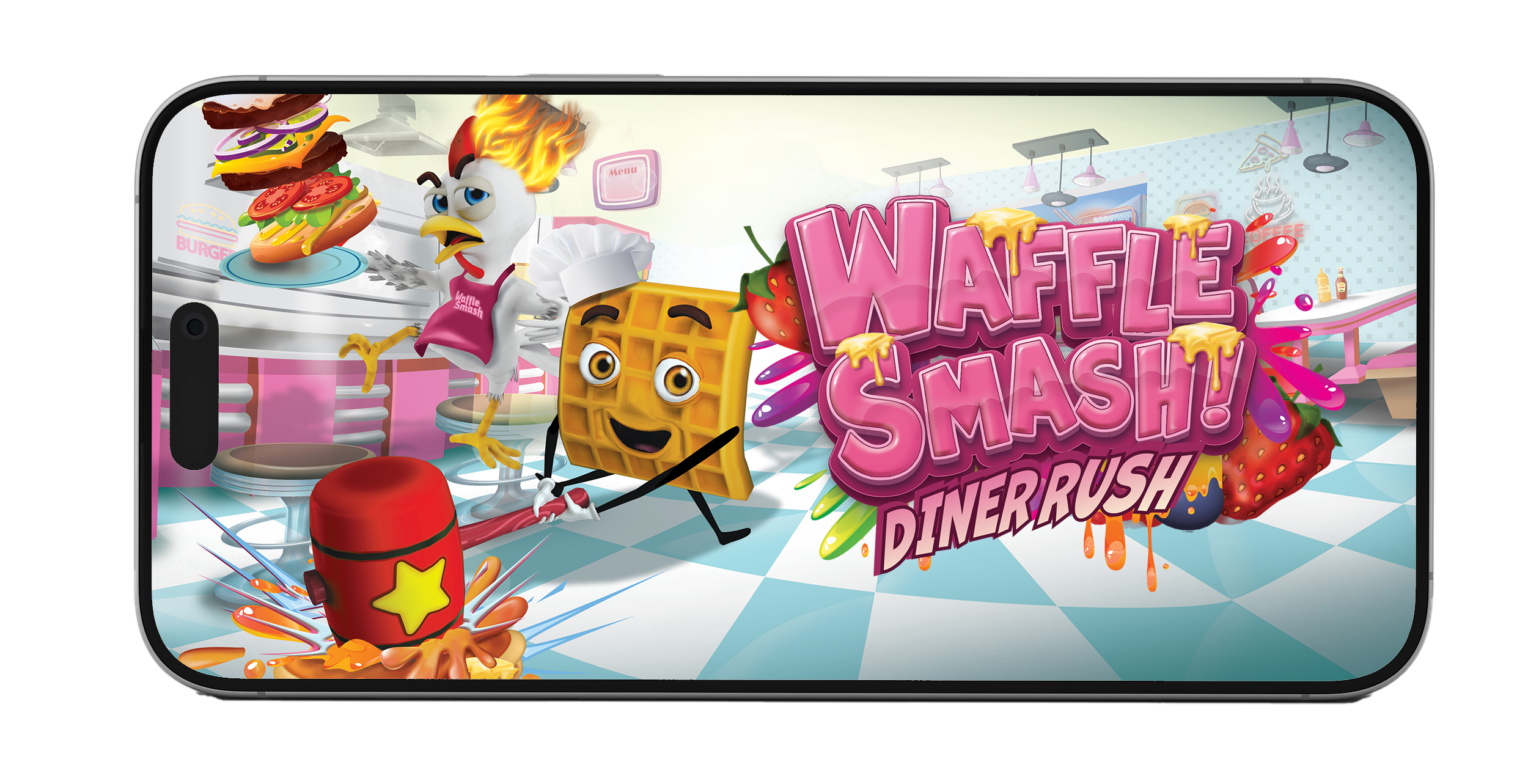
Build a match-3, diner management mobile game, simple enough on paper, right? Except we wanted the map for 2,000 match-3 levels to span 45 unique worlds, and players could grow and customize their diner as big and as unique as they wanted.
Our Team?
With a small team of just 4-10 people, this was no small feat: our developers built out multiple custom systems to handle the game's moving parts, while our artists took 2D and 3D assets from concept to final polish.
My role in all of this? I led the UX/UI design, worked closely with stakeholders to keep the vision on track, managed the art team, and partnered with developers to solve problems along the way.
My Role?
I led the UX/UI design, worked closely with stakeholders to keep the vision on track, managed the art team, and partnered with developers to solve problems along the way.
Starting from the GDD...
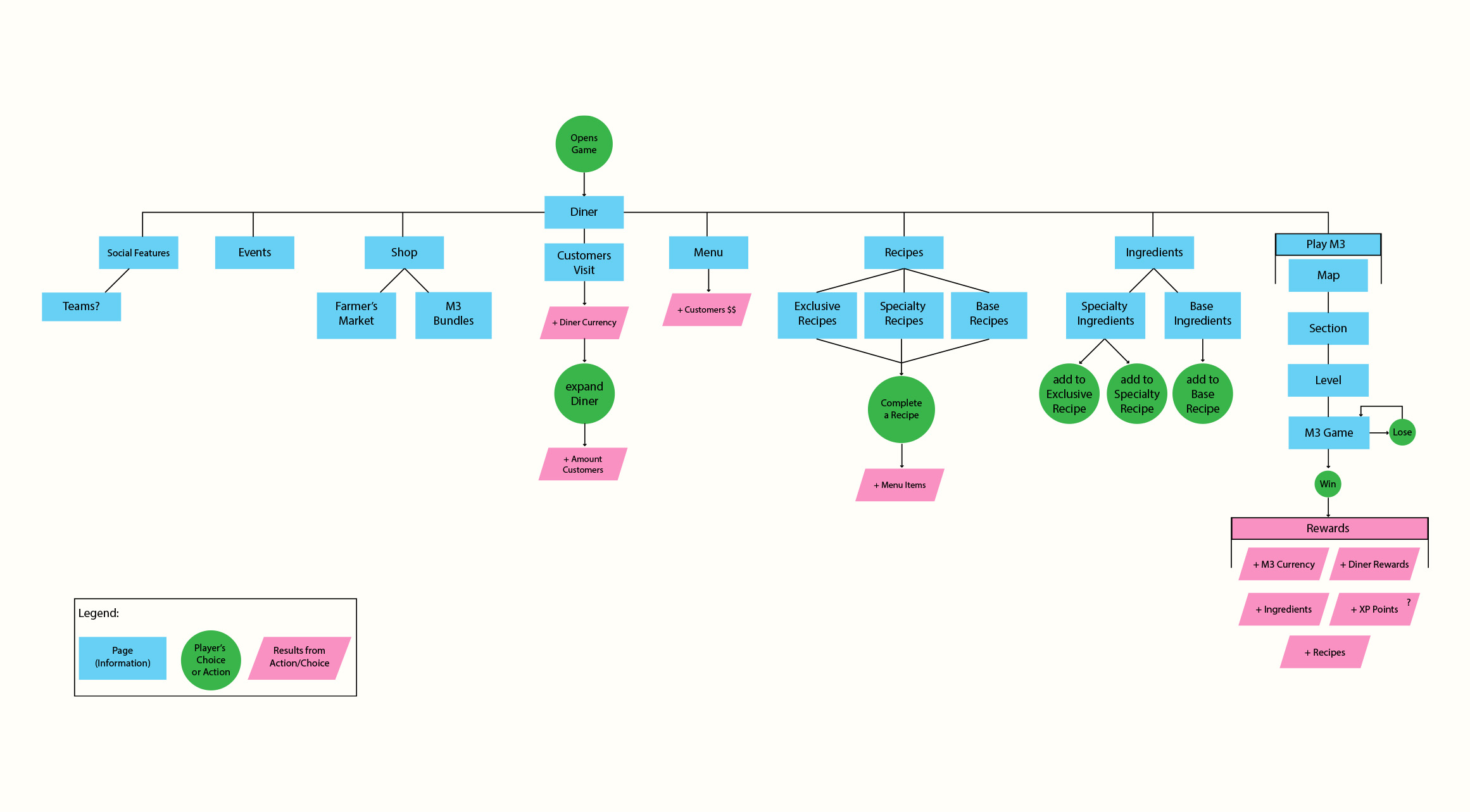
First things first, I dove into the GDD (game design doc) to get a solid grip on all the asks and wants for the game. From there, I translated everything into a game flow chart, mapping out exactly how players would move through and interact with the game.
This gave the developers a handy cheatsheet to start building from, and it gave me and the artists a clear way to break down, organize, and plan out the different projects within the product.
Wireframes, Buttons, Colors, & More!
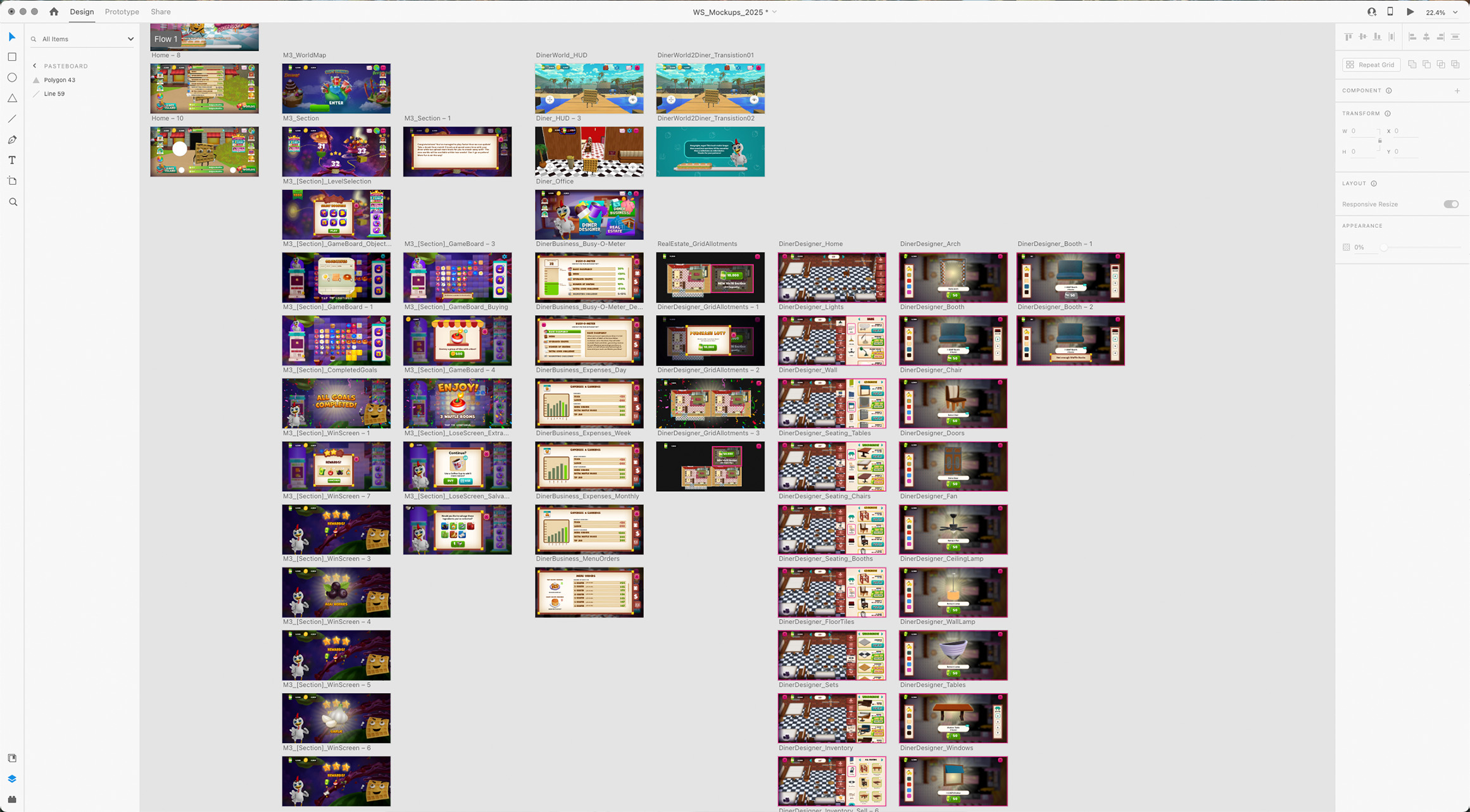
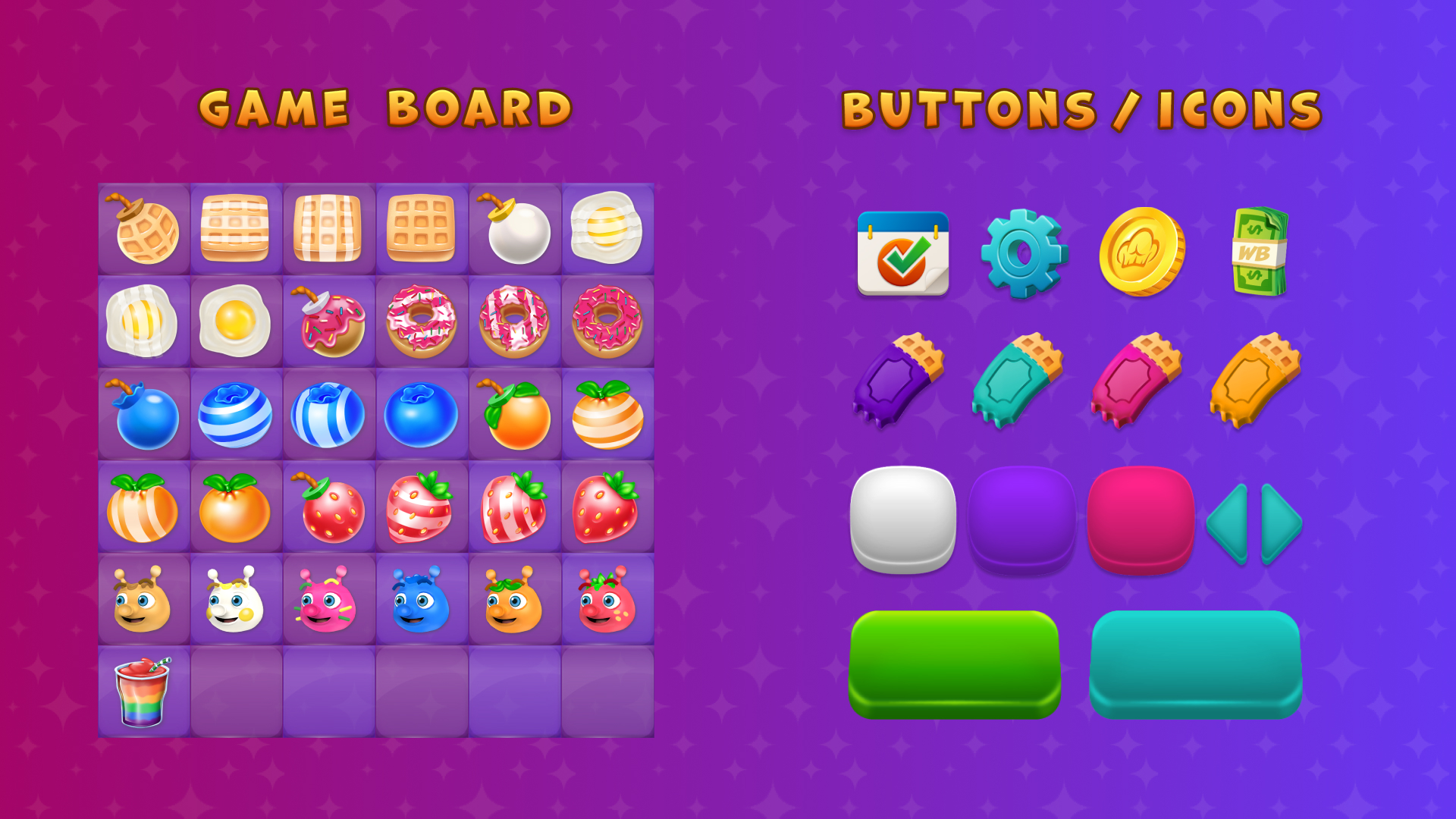
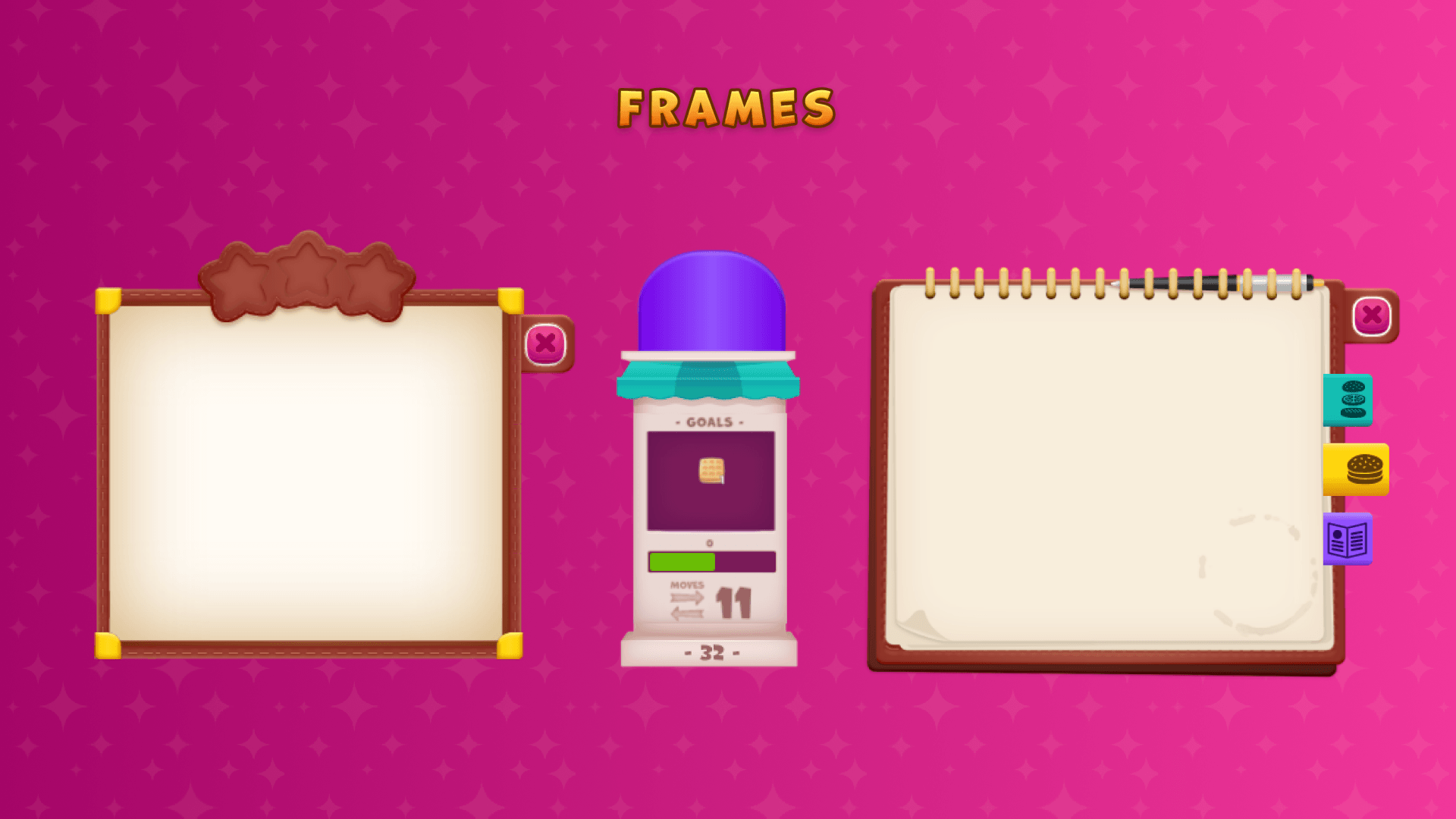
Next up, I focused on nailing down the overall branding and feel of the game, thinking through fonts, colors, stylization, and what the buttons and popup frames should look and feel like. Alongside that, I wireframed out where all the buttons and popups should live, giving the developers a solid place to drop in placeholders while they worked their magic.
For the UX/UI, I wanted the game to feel colorful, bright, and honestly, kind of "tasty," like the pieces and buttons could practically be eaten. Pink played a huge role in the original Waffle Smash game, so I wanted to pay homage to that legacy, but I didn't want to go full-on pink for this one. Instead, I darkened and muted it into more of a magenta and paired it with teal as the secondary color. The goal was to make the palette feel a bit more gender neutral compared to the original's bright pink vibe.
Specific Challenges and Their Specific Solutions
collecting ingredients and making recipes
One of the trickier problems to solve was figuring out ingredient collecting and recipe making. How should it look? How should it flow? And how do we show players what's common versus what's rare? The solution was building out a "Recipe Book," an inventory tucked into the side bar menu where players could see every ingredient they'd collected as they played through the match-3 levels.
Inside the Recipe Book, ingredients and recipes are sorted by rarity, common, uncommon, rare, extra rare, and epic, with ratings based on both how rare an ingredient is and how much it boosts menu revenue. Giving each rarity tier its own color made it easy for players to glance at their inventory and instantly know what was going to benefit them most.

customization for the diner designer
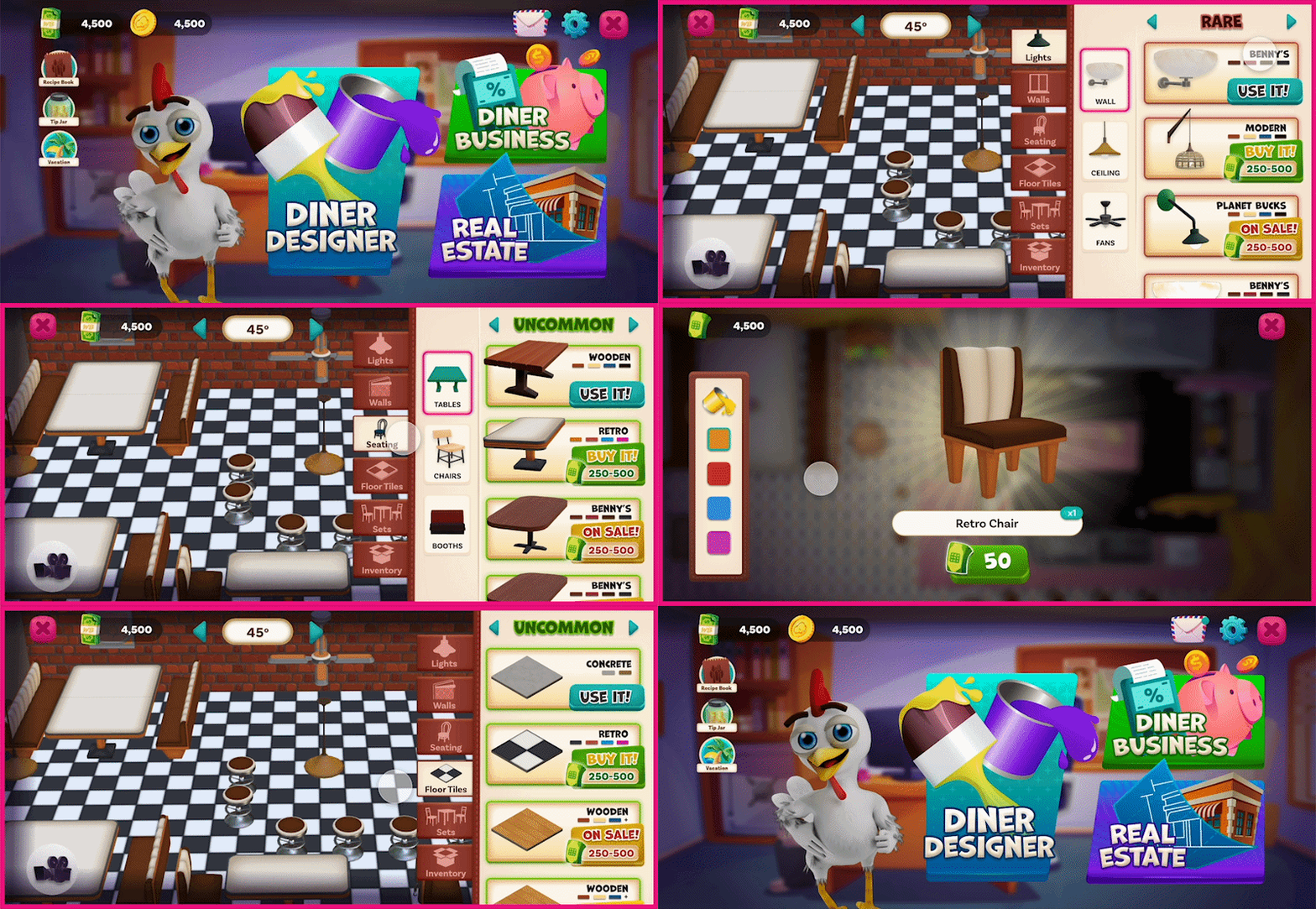
Another big hurdle was furniture and decor placement in the diner. A requirement was that players have the ability for full customization: swapping floor and wall tiles square by square, adding or removing walls, mixing chair and table styles, and adding unique lighting and decor throughout.
Our solution was a robust inventory system where players could purchase, place, store, and sell items, organized into six main categories (lighting, walls, seating, floors, decor, and inventory) with sub-categories for easy browsing. It was clunky at first, but testing helped us refine it into a smoother, more intuitive design process for players.
mvp
While the game is currently on hiatus, we're proud to say we got an MVP out into the world, live on both the Play Store and Apple Store. It was such a rewarding experience being able to take this project from concept all the way to launch with such a small, dedicated team, and I'm grateful for everything I learned along the way about UX/UI, cross-team collaboration, and problem-solving on the fly.